
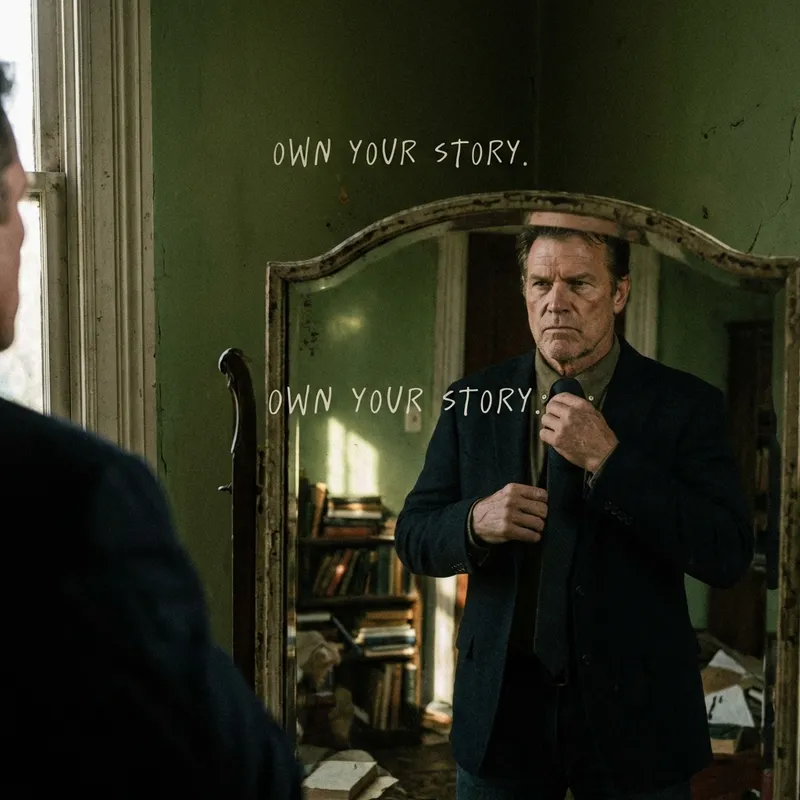
To escape victim mentality after divorce, men must shift from 'External Validation' to 'Internal Ownership'. This involves moving beyond the 'Nice Guy' trap of perceived unfairness and adopting a logic-first framework that replaces the 'Why Me' loop with extreme ownership of one's future trajectory, effectively transitioning from a reactive survival state to a proactive architecture of purpose.
How divorce changes a man is not just emotional — it is a battle for ownership over his own life.
While you may have been treated unfairly in the divorce, staying in the role of the “victim” is the most dangerous trap a man can fall into. As we discuss in the Biological Stress of Divorce, your brain settles for victimhood because it is a low-energy survival state. But victimhood removes your power to design a future. True post-divorce grounding only happens when you realize that even if you didn’t choose the situation, you must choose the response.
The Architecture of Victim Mentality:
- The Blame Game: Focusing 100% on what she did and 0% on what you can do.
- Passive Existence: Waiting for “time” to heal you instead of taking active steps.
- The “Why Me” Loop: Treating the divorce as a personal attack from the universe rather than a life event.
- Moral Superiority: Using your pain as a badge of honor to avoid moving forward.
Escaping Victim Mentality (Quick Answer)
Victim mentality is a comfort trap. To escape it, you must move from External Validation (wanting people to feel sorry for you) to Internal Ownership (taking absolute responsibility for your future). This requires a transition from emotional passivity to a logic-first framework.
The “Nice Guy” Victim Trap
Many men feel they were “good husbands” who were betrayed. This sense of injustice creates a specific type of victimhood called the “Nice Guy Trap.” You believe that because you did your best, you shouldn’t be suffering. This is often triggered when you discover your ex-wife has engaged in monkey branching to a lower-value partner. But the reality of divorce doesn’t care about fairness; it only cares about your ability to adapt and survive.
From Blame to Blueprint
Victimhood is often the final stage of the mindset collapse. It starts with unprocessed anger and solidifies during the phase of chronic overthinking. To stop the slide, you need a rebuilding blueprint (Men’s Divorce Mindset System). When you cannot solve the “Why,” you settle for “It’s not my fault.” While that may be true, it’s also a dead end.
Signs You’re in a Victim Frame
- Constantly talking about the “unfairness” of the legal system or your ex-wife.
- Avoiding professional or personal growth because “what’s the point now?”
- Seeking sympathy from friends and family rather than tactical advice. This is why you need to audit your social A-Team to ensure they are pulling you forward rather than anchoring you to your pain.
- Feeling like life is happening to you, rather than you happening to life.
Technical Note: Extreme ownership is the only antidote to victimhood. You must take responsibility for your recovery, even if you weren’t responsible for the rupture.
Rebuilding the Alpha Frame
The victim lives in a “Reactive Frame.” The empowered man lives in a “Proactive Frame.” Breaking the victim identity is about realizing that your ex-wife no longer has the power to define your happiness—only you do.
Final Thoughts
You can be a victim, or you can be a man who had a difficult divorce. You cannot be both. The moment you stop asking “Why did this happen?” and start asking “What am I going to do now?”, your comeback has officially begun.
Common Questions
How do you handle Breaking the Victim Loop: From 'Why Me' to Extreme Ownership?
To escape victim mentality after divorce, men must shift from 'External Validation' to 'Internal Ownership'. This involves moving beyond the 'Nice Guy' trap of perceived unfairness and adopting a logic-first framework that replaces the 'Why Me' loop with extreme ownership of one's future trajectory, effectively transitioning from a reactive survival state to a proactive architecture of purpose.